Most people think magic is about secrets. Pull a coin from behind an ear, make a card vanish, find the chosen one in a shuffled deck. Trickery, sleight of hand, the art of fooling the eye.
But ask anyone who's spent years learning magic, and they'll tell you the secrets aren't really the point.
Magic, when properly learned, quietly teaches a remarkable set of life skills. It builds confidence in shy children, sharpens focus in restless ones, and gives adults a creative outlet that's genuinely rewarding. It's been used in classrooms to help children with learning difficulties, in therapy to help patients regain dexterity after strokes, and on stages everywhere to entertain millions.
Here's why learning magic might be one of the most underrated hobbies you could pick up, for yourself, or for a young person in your life.
1. Confidence and Public Speaking
The first time anyone performs a trick for an audience, even an audience of one, something shifts. You have to look someone in the eye, hold their attention, and deliver. There's no hiding behind a script or a screen.
Children who struggle with shyness often blossom through magic. The trick gives them something to hide behind at first, but the skill of performing slowly takes over. Within months, kids who barely spoke up in class are confidently performing routines for friends and family.
For adults, the benefit is much the same. Public speaking, presentations, even social conversation, all become easier once you've stood in front of a small audience and held their attention with nothing but a deck of cards and your wits.
2. Fine Motor Skills and Dexterity
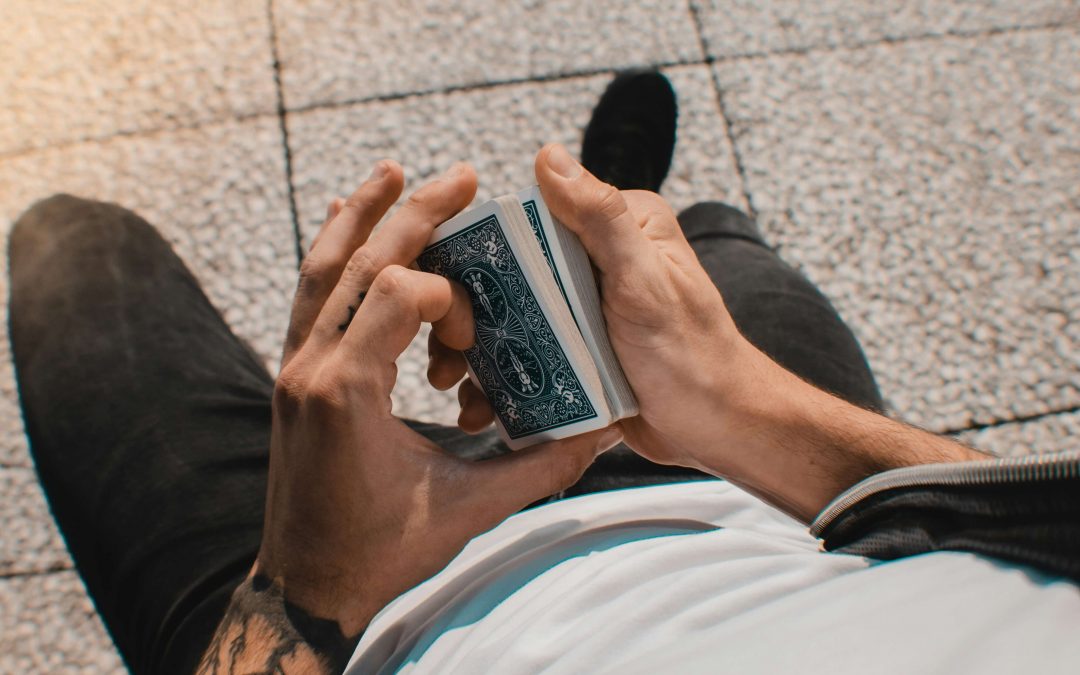
Sleight of hand requires precise, repeated, deliberate movement. The kind of fine motor control magicians develop spills over into everything else: handwriting, musical instruments, sport, surgery (yes, really, there are studies showing surgeons who practise card magic improve their suturing).
For children, this kind of focused practice is invaluable. For older adults, learning magic has been used in occupational therapy to maintain hand dexterity and cognitive sharpness.
3. Patience and the Joy of Mastery
Magic cannot be rushed. A move that takes ten seconds to perform might take ten months to learn properly. Practising the same flourish a hundred times in front of a mirror, slowly improving, building muscle memory, this is genuinely difficult work.
In a world where most entertainment is instant and disposable, magic teaches the opposite lesson. Real skill takes time. The reward isn't the trick itself, it's the long, slow journey of becoming someone who can do the trick well.
That's a lesson worth learning at any age.
4. Creative Problem-Solving
Every magic effect is, fundamentally, a puzzle. How do I make this object appear to vanish? How do I direct your attention away from this hand without you noticing? How do I structure a routine that builds to a satisfying climax?
Magicians are essentially designers, illusionists, and storytellers all at once. Learning magic forces you to think creatively, to invent, adapt, and solve problems on your feet. These are exactly the skills employers value most, and exactly the skills harder to teach in a classroom.
5. Empathy and Reading People
Good magicians don't just do tricks at people — they perform with people. To do that well, you have to read your audience. Are they nervous? Sceptical? Excited? A skilled performer adjusts in real time, adapting their patter, pacing, and energy to whoever's in front of them.
This is empathy as a practical skill. Magic teaches you to pay close attention to other people: their reactions, their body language, what they're enjoying and what's going over their head. It's a skill that pays off in friendships, relationships, and any career involving other humans (which is to say, almost all of them).
6. A Lifelong Community
This last one isn't strictly a skill, but it's worth mentioning. The magic community is genuinely warm and welcoming. Local magic clubs, like our own South London Magic Society, going strong since 1948 — are full of people of all ages and backgrounds happy to share what they know, swap tricks, and welcome newcomers.
Picking up magic as a hobby means joining a tradition that stretches back centuries. It connects you to a global community of people who share your interest, from local enthusiasts to professional performers.
How to Start Learning Magic
The good news :) ! You can start today, with a deck of playing cards and a YouTube tutorial. There are some genuinely excellent free resources online, and a small handful of beginner books that will set you up properly.
If you're in South London and want to learn alongside others, our society meets monthly and welcomes new members of all skill levels. We have professional performers, lifelong amateurs, and complete beginners in our ranks. Drop us a message, we'd be happy to tell you more.
Whether you ever perform for an audience or not, learning magic is its own reward. It teaches you patience, sharpens your mind, and gives you a small superpower for the rest of your life.
The secret, it turns out, is that there's no secret at all. Just a craft worth learning.
Blog By:
James Cowan
Proud Member of South London Magic Society & Member Of The Magic Circle

Recent Comments